
Cooking techniques and ingredients vary widely across the world, from grilling food over an open fire to using electric stoves, to baking in various types of ovens, reflecting unique environmental, economic, and cultural traditions and trends. Types of cooking also depend on the skill levels and training of cooks. Cooking is done both by people in their own dwellings and by professional cooks and chefs in restaurants and other food establishments Cooking involves knowledge of ingredients and equipment, the use of skills and techniques and the ability to plan and safely organise food preparation, usually within budget and time constraints.
Types of Cooking Methods
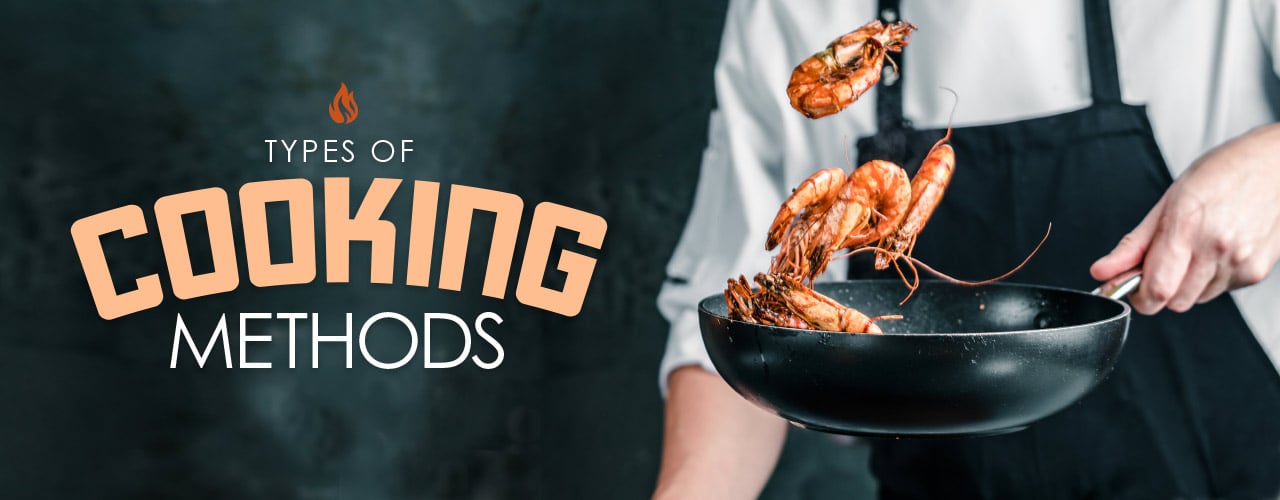
The three types of cooking methods are dry heat cooking, moist heat cooking, and combination cooking. Each of these method uses heat to affect foods in a different way. All cooking techniques, from grilling to steaming, can be grouped under one of these three methods. Understanding and mastering the different types of cooking methods is essential to becoming a great chef or home cook. Knowledge of cooking techniques allows you to work with a variety of ingredients and kitchen equipments to achieve consistent, flavorful results in your cooking. Continue reading to learn about the three main types of cooking, all the techniques that fall under those types, and the foods that are complemented by these techniques.
1) Dry Heat Cooking

Dry heat cooking works without the presence of any moisture, broth, or water. Instead, it relies on the circulation of hot air or contact with fat to transfer heat to foods . Temperatures of 300 degrees or hotter are used to create browning, a reaction where the amino acids and sugars in food turn brown and create a distinct aroma and flavor.
2) Moist heat cooking

As the name indicates, moist heat cooking relies on the presence of liquid or steam to cook foods. This method can be used to make healthy dishes without any added fat or oil. It’s also a great way to tenderize the tough fibers in certain cuts of meat, like beef chuck or brisket. When cooking fibrous vegetables and legumes, moist heat cooking softens the food until it reaches the perfect tenderness. Unlike dry heat cooking methods, moist heat cooking will not produce a browned crust.
3) Combination Cooking

Combination cooking utilizes both dry and moist cooking methods. Foods are cooked in liquids at low heat for an extended period of time, resulting in a fork tender product. This technique works with the toughest cuts of meat, gradually breaking down fibers until they melt into the liquid.
How to make Sweet Rasgulla at home
Ingredients
1) Needed full cream milk 1 liter
2) 2 tbsp Lemon juice
3) 1 cup Sugar
4) 3 cups water
5) Cardamam 2-3 pods
6) Saffron
Method
1) Heat milk in a pan.
2) Remove from heat once it comes to a boil.
3) Add lemon juice.
4) The milk will curdle and the whey will separate.
5) Strain the milk in a muslin cloth and collect the cheese.
6) Run the cheese under cold water to remove the sourness from the lemon.
7) Hang the muslin cloth for an hour to remove excess water from the cheese.
8) Take out the cheese on the work surface and knead for 4-5 minute till it becomes smooth.
9) Make 10-12 small balls from the cheese.
10) Heat water, sugar and cardamon in a pan.
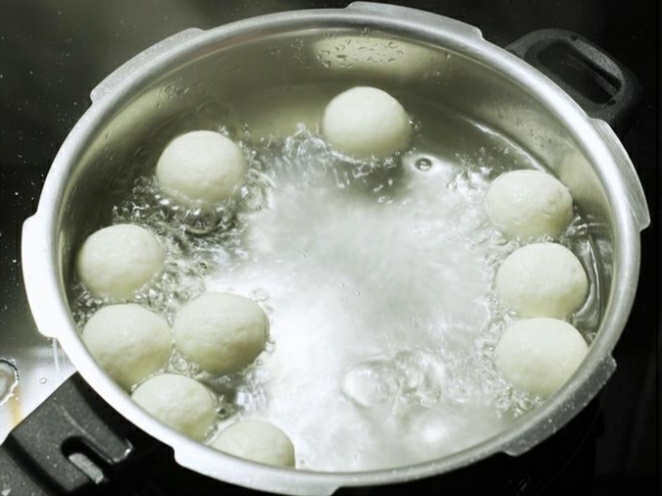
11) When the water comes to a boil, add the cheese balls in the water.
12) Cook covered for 40-45 minutes on low heat.
13) Remove from heat and cool.
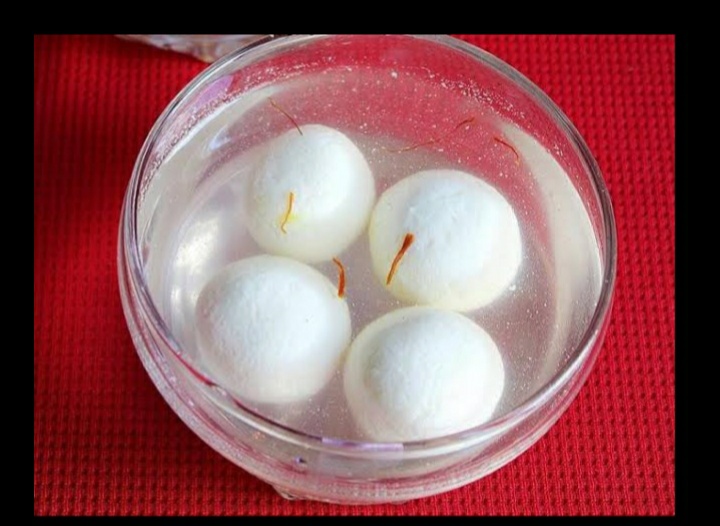
14) Serve chilled.
 Its all about how you cook in your own style.😉😎